Thursday, 16 June 2011

Identity Crisis and Personal Integration : Notes and Photos


June 25, 2011: 
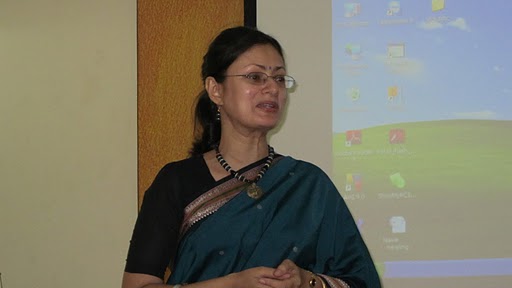
Uday Acharya conducted a workshop on Identity Crisis and Personal Integration
At VesLarc Vedanta Room in VES Management Institute, Mumbai.


Ram Keshwani, Trustee Vivekananda Education Society

 Uday Acharya - Trustee, Vidya Vaaridhi Trust
Anushka Panjabi - Executive Manager VESLARC
Piya Mukherjee - Director VESLARC

A Nagananda, Faculty VESLARC 

Workshop Participants 

Thursday, 2 June 2011

Serenity Attitudes


Better than doing more or doing less, I do things just right, more or less.

I Give time to the important things in life.
I go beyond competition and explore new avenues...getting  there before others do
I believe I can do much more..... There is ample scope for improvement
I give time to the important things in my life.
I Give Trust to win Trust; give understanding to gain understanding; show respect to earn respect.

Friday, 20 May 2011


Smt. Susheela Acharya, a long-time, senior member of BSKBA is known for her dedicated  musical contribution to Gokul and other associations of Kannadigas. Her self-written and tuned compositions are enough to keep one learning them for years together. About 70 such compositions have been compiled into 2 sets of CDs - one with Namavalis, and bhajans in Hindi and the other, with only Kannada devotional songs. 

These sets of songs, mainly sung by daughter, Pramodini Rao and grand-daughter, Ujwala Acharya, will be released at a function at 4.00 pm on 5th June, 2011 at Chinmaya Vibhooti, the Vision Centre of the Chinmaya Mission, at Kolwan, near Paud (Dist. Pune). 

The project is an attempt, by students who have directly learnt from her, at offering back some flowers from where they have been plucked! The project sees its fulfillment due to the encouragement and blessings of Swami Tejomayananda, the Global Head of Chinmaya Mission, who, along with other well-wishers, have contributed their mite towards bringing out this collection of original compositions in praise of the Lord.

This is an occasion of pride and joy for all Kannadigas, Mission Members, and other well wishers who have had the privilege of interacting directly with Smt. Susheela Acharya over the years.


"Doing What You Love": My Interview on Spring Magic Life


Uday AcharyaManaging Director at Mindflex  

Trustee at Vidya Vaaridhi Trust
A101  Mani Bhavan, 11th Road, Chembur,
Mumbai 400071. Ph: +91 9833663108
Industry: Management Consulting
                                           Working Type: Mixed Adventures (Employed &Entrepreneur)
Adventure Stage: Practicing to Fulfilling

1. Passion for Learning and Sharing

I am fundamentally an idea person. I get excited about new concepts and possibilities. Reading, movies, lectures and conversations are all grist to my mill, and I like to mull over the possibilities connected to these concepts. It was but natural that I gravitated to teaching and training where I get opportunity to learn and to share my learning with likeminded groups and individuals.

I love Vedanta. Vedanta excites me much because it tells me there are no road blocks in life. Rather there are only events to be experienced and situations to be dealt with. At the end of the day you are left with just yourself….. plus the memory of experiences, and these you put behind you to start the new day with a fresh page.

Every new day is filled with rich possibilities and every evening is stock taking time in which you process experiences and carry forward the learning to the next day. Life is a play where you exercise your muscles and mind, building and testing your skills. I enjoy the process of joint exploration of issues in interactive conversations with people. I also listen to emotions behind the words to know how it is or was for the person on the other side of the fence. The process of heads and hearts coming together accounts for great breakthroughs in personal and professional issues.

I also am an out of the box thinker and usually come up with a totally different take on the issue. Sometimes, my contribution is accepted enthusiastically, but many times, the ideas are taken with a pinch of salt. Some of my most enthusiastic ideas have received cold water response, and it is a challenge for me to recreate the same ideas in a new format that is more acceptable and practical for application. This has helped me build new and novel training modules, one of which is an all time favourite in my ITM (Institute of Technology and Management) workshops...... Multiple Quotient – IQ EQ & SQ (Spiritual Quotient).

Thursday, 14 April 2011

Why care about who is right? Can we mutually explore what is right?


A learner by choice and teacher-trainer by convenience. I love to examine conventions, beliefs and ideas, read books, interact with individuals and groups, pen down my thoughts, and work with people to help make difficult things easy.

Yes, I explore ideas, patterns, cause-effect relationship, 'I told you so' attitudes, and 'who are you to question my system?' defences. The idea is not to break down or replace systems, but to integrate knowledge represented by different ways of thinking. 


This involves breaking down systems into building blocks, and then putting them together with a wider perspective. What I refer to as integrational questioning rather than destructive rhetoric.

It is not important for me as to who is right or wrong; I am exploring what is right or wrong. Usually, arguments arise due to rigid views and unclear communication (and these two form a mutual admiration 
society.)  


90 percent of arguments happen due to hidden assumptions, poor expression,  and poorer listening skills. Today, living in a complex world that we barely understand, we need more of clear communication and mutual respect to resolve issues and come to a  sconsensus.


International affairs or personal relationships, we need mutual assuarances that we are here to co-operate rather than to score brownie points. Win win thinking is based on the belief 'I'm ok; you are ok; the  world is ok". I can work with you to reach my goals, and you too can work with me to reach your goals. 


I want to help you. Can you help me to help you? Can you unlock my shackles so that my  hands are free to help?  


Wednesday, 13 April 2011

Life is a Paradox: A paradox of Parables


Opposite Proverbs(Choose the appropriate one for the occasion)


A man's reach should exceed his grasp.
A bird in the hand is worth two in the bush.

Above all, to thine own self be true.
When in Rome, do as the Romans do.


It's never too late to learn.
You can't teach an old dog new tricks.


Good things come in small packages.
The bigger, the better.


If at first you don't succeed, try, try again.
There's no point in beating a dead horse.


Monday, 4 April 2011

1..Tough times never last, but tough people do.  - Robert H Schuller
2. The difference between stumbling blocks and stepping stones is how you use them. – Unknown
3. Never let your head hang down. Never give up and sit down and grieve. Find another way. And don’t pray when it rains if you don’t pray when the sun shines.  -Leroy Satchel Paige
4. A problem is a chance for you to do your best. – Duke Ellington
5. I ask not for a lighter burden, but for broader shoulders. – Jewish Proverb

Thursday, 31 March 2011

Optical Delusion of Consciousness - Albert Einstein


A human being is part of a whole, called by us the “universe,” a part limited in time and space.  He experiences himself, his thoughts and feelings, as something separate from the rest — a kind of optical delusion of his consciousness.  

This delusion is a kind of prison for us, restricting us to our personal desires and to affection for a few people near us.  Our task must be to free ourselves from this prison by widening our circle of compassion to embrace all living creatures and the whole of nature in its beauty.

— Albert Einstein


Wednesday, 23 March 2011

Boredom to Cheerdom: feeling bad or feeling better


Boredom comes when I  have an agenda that I am not inclined to go for, -  because the process is painful, or because I wait at length for the world to make me happy, as if it owes me an obligation. Honest work undertaken to reach meaningful results keeps me motivated and free from boredom, even when I am way away from reaching my destination. 

Boredom makes me discount the value of what I have achieved, because of overconcern with what I do not have. It is important to open my eyes to the beauty of the present moment while I pursue goals over the long term. 

Boredom also tells me that what I have is not what I really want. It indicates an absence of situations that present a challenge to me. It is necessary therefore to re-evaluate my pursuits to isolate the inspiring from the mundane. Life is what I make out of it. The secret is in making choices that keeps me moving forward.


Tuesday, 22 March 2011

Serenity Interactive - The Fear Factor


The Nature of Fear

J:         
Hi!  Would like to talk about fear

U:
Ok. What about it

J:
I am not nervous. As in when I sing etc I am very confident...  not that kind of fear … but a deeper fear... so what is fear?
U:
What is your fear all about? Existential? Psychological? Situational? Or Just....

J:  
All of it!!!
 U:
Tell me more about it.... where do you feel it most.... chest, tummy, neck....?

 J:  
Tummy I think
 U:
Ok. What frightens you... disagreements.... loss.... hurts.... violence....

 J:         
Disharmony of any kind definitely disturbs me. I can’t function normally till it is sorted completely ... I don’t     experience fear while discussing etc. fear of death is a BIG one. An imp desire is to prove myself as a successful person to my own self and few others... don’t want to die before tat ... first of all is fear an instinct or feeling?

Expectations - To Have or Not to Have


P:
Having expectations is not a problem. They are necessary for working towards achieving our goals. Expectations are connected with our actions. What are the drivers of our actions? Are they essentially based on  Love or fear? What makes 'expectations' problematic is having 'unrealistic expectations'! 
Unrealistic expectations are born out of  unbalanced and unhealthy drivers. 
Fear,  Loss, are the main ones I guess!

V:
Having expectations is not something I have a choice over. Most actions before they are performed have expectations which propel them. So nothing will be done if there is no expectation of a result.
Expectations can be valid and yet create problems because many a time what I expect and what I get are poles apart! Is this because I am a poor judge? Or is it because I do not have the capacity to project? Any answer only shows me how limited my capabilities are!
So expectations become a problem when disappointment is the result and not a problem if one knows how to handle the disappointment.  

S:
Why is having expectations a problem?  This is especially true in situations that are beyond our control - when no action is possible.  If one can try his/her best, then at there is the satisfaction of having tried.
S':
We do not have much choice over what is out there - could potentially feel like stress. But we have a choice over is whether to feel distress or act objectively and continue performing actions with "no guarantee expected" over the results.
--------

The Nature of Renounciation

Tyaaga

Chandni:


On guru poornima this year, the discussion started off with Acharyaji asking all of us present to talk about some topic that we liked or which affected us the most!...When the pointer came to me I was clear about what I wanted to talk about. The motive behind my choosing a topic like "tyaga" was to get an opportunity to learn more about it..

"Tyaga or renunciation is one of the most fascinating traits that a person can possess. To be able to do Tyaga one must be able to let go of things they love the most for a higher cause. At some point we all have to sacrifice something at some level, But to do it and not regret it, that is where all the difference comes. Because it is one of the most difficult things to do, the person who is able to do tyaga in its true sense is considered great." Everyone seemed impressed with my perception of tyaga.  
Acharya was smiling and then asked a simple question "why does one do tyaga?" I replied - "for a higher cause and to be happy." He then explained the concept of tyaga with the example of the sacrifices a mother does for her child. 

"Why does a mother willingly sacrifice for her child?" he asked.  Someone answered, "because of love". 
He asked, "what is love?" Now we had all heard and felt 'love' but no one could explain it!....

 Acharya simply said "Love was a feeling of oneness". He continued, "now if I do tyaga for someone I love, then the thing that I give up has not gone anywhere! It is just like shifting it from one pocket to other "…. 

Everyone burst into involuntary applause! I was smiling more than I ever have….The experience of learning about "tyaga" with such simplicity was truly amazing!


Serenity Ineractive - Dharma: Ethical Dilemma:

"Avalue is a value when the value of the value is valuable to you." - Swami Dayananda

Universal Laws

Universal principles (or Dharmas in Sanskrit) that govern our lives, health, learning, relationships, and happiness are illustrated by the law of the farm. In a farm, we need to understand how nature works in order to work with it. We prepare the soil, sow the seeds, water the fields, and protect the plants. The rest is taken care of by nature. 

The laws of ‘cause-and-effect’ determine what type of results we get for the efforts we put in. We cannot cheat in the farm, ignore the rules of farming and then expect to get the fruits without efforts. Stephen Covey speaks about aligning our lives by these universal natural principles.

Just as the compass always points out north, we have an inner guide or conscience and a rich collection of wisdom literature to guide us for sustainable and lasting results. Going against these principles is like ignoring the compass. If we miss our direction on the high seas by just one degree, we can end up in the Andaman Islands instead of Goa.

These principles apply to success and fulfilment in work and in relationships. As long as we lack self mastery, we cannot expect to get success in the external world. Personal victory is a prelude to the public victory. According to Swami Chinmayananda, you “master the mind to master the world.” This self mastery includes adherence to an ethical code that tells you to ‘do unto others as you would have others do unto you.’


The Relative Nature Of Values


While many of the values are a matter of personal choice or social structuring, ethical values are universal and apply uniformly to all human beings. No person wants to be hurt, robbed, lied to, or abused by others. Everyone expects affection, assistance in need, and inclusion from others. Ethics is the cement that binds relationships and society. Spirituality and Religions adds the element of after-life to makes ethics apply beyond our lifetime.

Though ethics are universal, they have to be relevant to the context and to the situation. Stress arises when we are confused about their interpretation. Value systems can range from the fanatical to the cynical. In fanatical ethics there are no exceptions to rules, while in cynical ethics, there are no rules!

Serenity Interactive - Control Drama


Psychological Control Drama
(online chat )

J:
So can we continue our talks on control dramas??
U:
Yes ... Drama always involves a build up and climax. Drama me twist hota hai. Control yields to loss of control and vice versa. Manipulation is reverse control. Nagging, ordering, challenging, rebelling, crying, blackmailing..... All control dramas. Avoiding, withdrawing, sulking, disappearing, daydreaming, are parts of the same drama. In fact drama means control, right?

J:
Googly! What are we trying to control and why?
U:
Reality. To suit our life script and world view. Control is not difficult because we have such willing partners

J:
We are trying to control reality? As kids?
U:
As kids we are testing reality and forming an opinion   through trial and error.

J:
Let’s say I am four years ....how did I get into my control drama ... if I have to write out a   sequel?
What do I need at four ...what am I trying to figure out at four? What are my challenges? How intelligent is a normal kid at that age? What’s my understanding really like...?  Do I have inherent traits that affect me?
U:
At 4 opinions were already set. Starts at birth and mostly done by 4. Most impressionable age. Some editing happens as we grow older... more of polishing and reviewing.

Self Fulfilling Beliefs - Our Destiny


How Do Beliefs Shape Our Life?

J:
Can we talk about how we create beliefs about various things, and how they affect us in our relationships and our personality
 U:      
Ok. What beliefs do you have in mind?

J:
I am talking wrt  the book by Louise Hay  where she talks about  how her  low self esteem  and the  belief that she is no good or lovable   which was created by her  childhood  experiences
U:      
Childhood experiences bring in a contrary belief such as I’m not ok, or you're not ok, or no one is ok.  Basic belief is I’m ok you're ok world is ok.  That is because of the child’s interpretation about events. Limited data and lacking in perspective Also the need to subscribe to such beliefs in order to manage events beyond its understanding.  They are useful to survive through childhood until we can grow to become adults.

J:
Can u give some examples? I mean examples of beliefs that we have as children which are useful
U:      
As adults we have better understanding, better perspective, better resources, and better skills. What is needed is to manage this transition smoothly. It is like the ugly duckling becoming a swan. Or the eagle growing up in a chicken's nest. From my own example: I could never express my feelings of sadness, fear etc. I needed to feel strong and above emotions. So I withdrew into my own shell and lived as an introvert. Traces of it are there even today. 


Fortunately I associated with role models who showed me a different world that I could peep into and learn. I also read and read and read...... So had access to a world of emotions that I could connect to .my condition made me empathise with other people's pain and helped me as a counsellor.  But I was not living my own emotional life.... Only a proxy through others

Saturday, 26 February 2011

Sadhana Shikhara Gaurava Puraskaara - Awaarded to Susheela Acharya

A Report in Udayavani Mumbai (Kannada) 26th Feb 2011


Smt. Susheela Acharya


Sadhana Shikhara Gaurava Puraskaara awarded to 
Dr. Kulkarni, Susheela Acharya, M N Suvarna
Mumbai Feb. 25

The Karnataka Sangha Mumbai's annual Sadhana Shikhara Gaurava Puraskaara has been bestowed on senior literary laureate Dr G V Suvanra, Susheela Acharya and Guru M N Suvarna.


Saturday, 27 November 2010

Reminiscences of my student days

My Pranaams to Gurudev Pujya Swamiji, my lifelong teacher and guide from my school days onwards. I remember attending one of his earliest public talks in Bombay on Bhagavad Gita (Chapter 9). The first verse alone is what I remember from the talk... Rajavidyaa Raajaguhyam. Subsequently, our Vedanta youth group had an opportunity to meet him at a private residence, and we were regaled by his frank, humorous, and perceptive observations. His story of ‘Annammal and therefore logic’ still rings fresh in my mind.


The ‘Teenagers’ Group’ was very cohesive and enthusiastic, and we didn’t miss an opportunity of attending lectures and satang. Group members included Geeta (Swi. Brahmaprakashananda) and Ram Mohan (Sw. Brahmavidananda) and many others who have studied Vedanta from Pujya Swamiji over the years. My father S V Acharya was our ‘Saarathi’, driving us in his Ambassador to most of these sessions. Our group met at least once a week and shared and the precious learning gathered from the discourses. Doubts were debated and unresolved questions were reserved for Pujya Swamiji to answer.

Tuesday, 10 August 2010

Wisdom to Know the Difference

Q. In the serenity prayer, though one is asking god for serenity to accept certain things and to change certain things and wisdom to know the difference, isn't that wisdom a question-mark? The attitude of surrender is so difficult.


I agree with you that wisdom is a vague word. As long as we live, we are learning, and our wisdom grows (hopefully) in the process. Ultimately there is no end to learning, and we do make mistakes. Real wisdom is the humility to admit that we were wrong or that we made a mistake. Only then are we ready to change or make amends.


Maturity, growth, wisdom - all these words reveal a degree or extent of a particular progression from ignorance towards knowledge, from conditioned thinking towards free thought, from beliefs towards facts. Ultimately, we require that much wisdom as will make our lives better, harmonious, functional and fulfilling. Is this asking for too much?


---------


Serenity Interactive
Topics of Interest


Fear      Beliefs      Control Dramas      


Distinctions - Complacency vs Contentment


A couple of years ago, my friend dropped in with a proposal for a multilevel marketing scheme. “There’s a lot of money for you to make, Uday,” he said. When I politely refused, he insisted, “You should change your attitude and think positively. You can be as rich as your heart desires. Invest now and see your wealth grow beyond expectations.”
That got me thinking. Am I putting this proposal off due to my middle class background, or am I genuinely not interested? There are some people who will never know their potential until they take the decision to buy in. Then there are other people who will struggle their entire life and not reach the promise they hoped despite having bought in.
So the question remains: What made me say no? Fear? Competition? Public opinion? Past conditioning? Inability to visualize riches? Complacency or Contentment?

The Heart of Acceptance


Acceptance requires that I come to terms with facts - I need to face the truth no matter how bitter it is. Acceptance does not mean approval or agreement. When my heart rebels against what my head says is true, I help the heart see what my head knows. The heart can then look for alternatives in co-operation with the head.


Acceptance is not easy. It implies my being able to confront disappointments and sadness. Life is a series of experiences to be assimilated, not a tragedy to be borne. Suffering is one side of life. Joy is the other. I have to deal with the one and value the other. Suffering is to be managed and minimized - I certainly do not have to suffer for suffering's sake. Suffering should motivate me to find solutions - not make me feel helpless and miserable. I am invested with the power of choice - I can choose wisely or foolishly. I responsible for making the appropriate choice - my choice can make or break my life.


In a hopeless situation, acceptance means that I register the fact, cut my losses, and move on to rebuild my life. I need to assess my loss, to realize its full implication, to experience in-depth the feeling of grief, and to finally to let it free to go its way.


If however the situation is redeemable or reversible, I take heart and meet the situation squarely, letting go of blame and dejection. I may wish for miracles, but I keep my eyes wide open to see, and my hands all ready to act.Acceptance does not mean compliance or defeatism. Life is like a computer game that starts from the beginner's level and progresses to higher levels of skill and difficulty. The challenge in life is to move on to the to the more difficult levels once the elementary levels are mastered. But no matter how skilful, there is always a level where I am out of my depth - I have to strike a balance between hitting out pointlessly and surrendering too easily.


Acceptance is what is implied in the serenity prayer. Where I can, do; where I can't, let go. I can use the word "tolerance" in the same way in the broadest sense of the word. Both these words have a upside and downside. I use the word "acceptance" in a positive sense rather than in the negative. The positive reveals a healthy attitude towards a difficult situation. The negative indicates the defeatist attitude of a person who has thrown in the towel and passively bears the brunt of the situation without looking for answers. Tolerance has the additional meaning of live and let live. One can tolerate difference of opinion and idiosyncrasies without having to accept or subscribe to those beliefs.


In the short run, I may need to minimize my pain so that I can get on with my life. This I can do by putting pain on the backburner, while I attend to necessary urgent affairs. I do not have to be a victim, paralyzed by pain. However, over the long term, I need to attend to the pain and heal myself. Acceptance requires that I to take the time to process my sorrow, and to eventually emerge a winner. It requires courage to deal with unpleasant issues in my life. But in the long run, I can make my life happy and fulfilling.

Monday, 9 August 2010

Karmanyeva Adhikaaraste Maa Phaleshu Kadaachana

Dear A....,


Regarding the Gita verse that you have explained:


KARMANYEVA ADHIKAARASTE MAA PHALESHU KADAACHANA
MAA KARMA PHALA HETUR BHUR MAA TE SANGOSTVAKARMANI
Bhagavad Gita - 2 - 47


1. KARMANYEVA ADHIKAARASTE
You can control (i.e. freely choose) action.


You are right about the confusion about the words adhikaara. General understanding is that you have a 'right or 'duty' to act but no 'right' over results. Adhikaara as choice or control makes for better meaning.


2. MAA PHALESHU KADAACHANA
Never over the results.


We can contol actions but not results. The results accrue because of universal laws of cause and effect. I can push a button to switch on the light, but if there is power shut down, mere pushing buttons cannot give me light. I have to find some other way.


Saturday, 26 September 2009

Ethics and Conflict : Serenity Group Interactive Articles


Ananthakrishnan:


Taitriya Upanisad in Sishya Valli gives following options:


1. Sastram & a Person who follows Sastram:


If there is a Contradiction between above two, then follow Sastram and omit person who is not following Sastram in that praticular Context.Eg. Durvasa Muni/ Viswamitra etc.,


2. Since Scriptures are made before 1000 of 1000 years, it can not predict all sitautions which we come across in day to day life.In that case, follow a Dharmic person though he alters Sastram to suit the situation.Eg. Lord Krishna in Maha Bharata violated Dharma in many occassions.


With above examples we understand that, nothing is absolute in the world including Dharma and there are lot of Grey areas and a clear line is not visible to follow what in a given situation.Can you elaborate on this?


-------------------


Uday :


You are very correct in your conclusions.
Nothing is absolute other than Brahman.


As for Dharma, it follows the cycle of changes according to the Yugas. Even though there are universal dharmas like truth and non-violence, the same are related to the situation and social structures. Hence what is proper for one culture may not be acceptable in another culture.


Shastra gives the thumb rule for dharmas. The wise ones interpret these rules and apply them to the present situation. There can be differences of opinion regarding the interpretations, but as long as there is no hidden motive or agenda, most interpretations may be taken as accceptable. The decision has to be made so as to be compatible with both shastra and conscience. The difficulty comes when the two are in conflict and both have equal weightage. At such times, it is time to consult someone more informed and experienced with such matters. In the event of no such help being available, we surrender to Ishwara and make the decision. Such decisions are may turn out right or wrong, but then we are ready to accept the consequences as learning experiences.